
Best Soy-Free Food Scanner Apps 2026
Soy hides everywhere — from bread to canned tuna to your morning coffee creamer. For the millions of people with soy allergies, grocery shopping feels like navigating a minefield. One wrong grab and you're dealing with hives, digestive issues, or worse.
The good news? In 2026, your phone can be your best defense. Food scanner apps have gotten smarter, faster, and better at catching soy in all its sneaky disguises. We tested the most popular options to find which ones actually work — and which ones might miss that hidden "hydrolyzed vegetable protein" that's really just soy in disguise.
Why Soy Is So Hard to Avoid
Soy is one of the "Big Nine" allergens, affecting an estimated 0.4% of children and persisting into adulthood for many. But here's what makes soy particularly tricky: it goes by dozens of names on ingredient labels.
You probably know to watch for "soy" and "soybean." But what about edamame? Miso? Tempeh? Those are obvious to most. The real problem is the hidden soy:
- Textured vegetable protein (TVP) — Usually soy
- Hydrolyzed plant protein — Often soy-derived
- Lecithin (E322) — Frequently from soy
- Vegetable oil — Can be soybean oil
- Natural flavors — May contain soy derivatives
- Mono-diglyceride — Sometimes soy-based
Reading every label takes forever. And even then, you might miss something. That's where scanner apps come in — they cross-reference databases and catch ingredients you'd never suspect.
What We Looked For in a Soy Scanner App
Not all food scanner apps are created equal. Some just pull basic nutrition info. Others dig deep into ingredient lists. Here's what we tested for:
- Soy detection accuracy — Does it catch hidden soy names?
- Database size — Can it scan your favorite brands?
- Speed — How fast from scan to result?
- Custom allergen profiles — Can you set soy as your specific concern?
- Offline access — Works in stores with bad signal?
Best Apps for Soy-Free Shopping in 2026
1. Soosee — Best for Real-Time Scanning
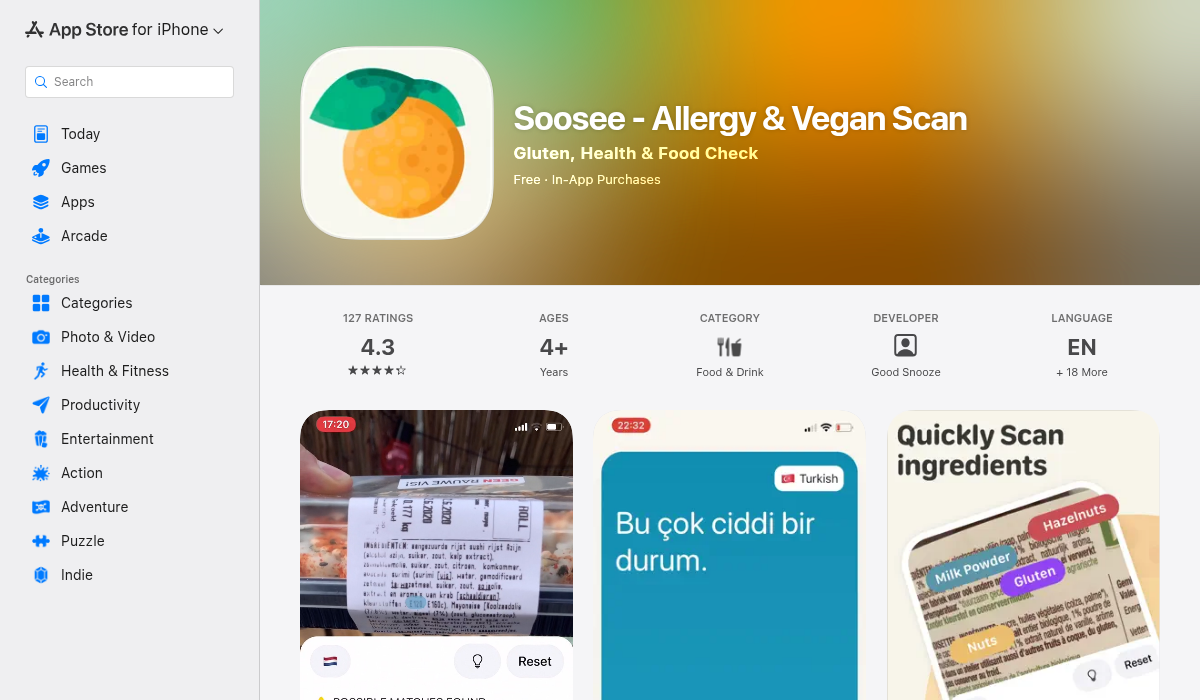
Soosee takes a different approach than most scanner apps. Instead of scanning barcodes, you point your camera directly at the ingredient list and it highlights allergens in real-time.
What we liked:
- ✅ Instant visual highlighting — no barcode needed
- ✅ Works on restaurant menus and fresh items
- ✅ Supports 15+ languages
- ✅ Catches obscure soy derivatives
Limitations:
- ❌ Requires clear text (blurry labels won't work)
- ❌ No nutritional data
- ❌ iOS only
One user review on the App Store sums it up: "This is an allergy mom's dream. I used it today and it recognized soy protein which I may have missed as the ingredients had changed in a product I always buy."
Best for: Parents checking packaged foods, anyone dealing with restaurant ingredient lists, travelers reading foreign labels.
2. FoodCheckr — Best for Additive Detection
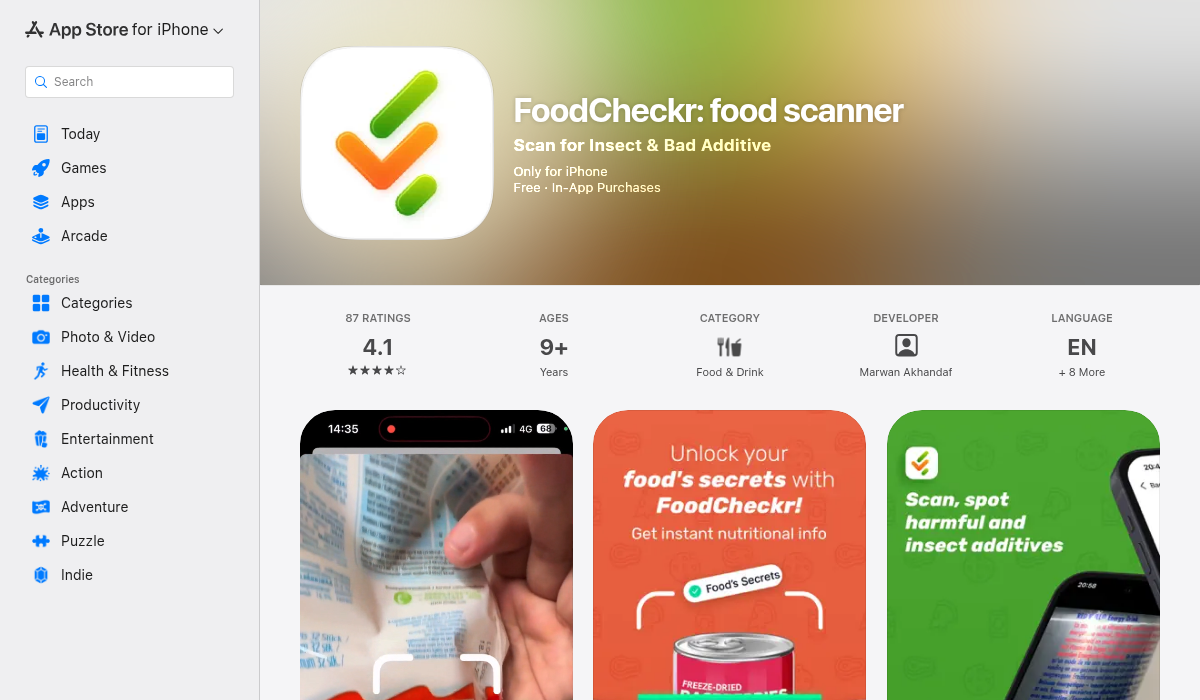
FoodCheckr goes beyond basic allergen scanning. It analyzes additives, flags potentially harmful ingredients, and uses AI to detect bioengineered components — including soy-derived additives that other apps miss.
What we liked:
- ✅ Catches soy-based additives like E322 (soy lecithin)
- ✅ AI-powered ingredient analysis
- ✅ Color-coded risk ratings for additives
- ✅ Scan history saved for offline reference
- ✅ No data collected — privacy focused
Limitations:
- ❌ Premium required for full AI features
- ❌ Smaller database than some competitors
What sets FoodCheckr apart is its focus on what else is in your food. It doesn't just flag soy — it tells you about every additive, preservative, and E-number. For people avoiding soy as part of a cleaner eating approach, this extra context is valuable.
Best for: Health-conscious shoppers who want to understand everything in their food, not just allergens.
Download FoodCheckr on the App Store
3. VeganCheckr — Best for Plant-Based Soy Alternatives
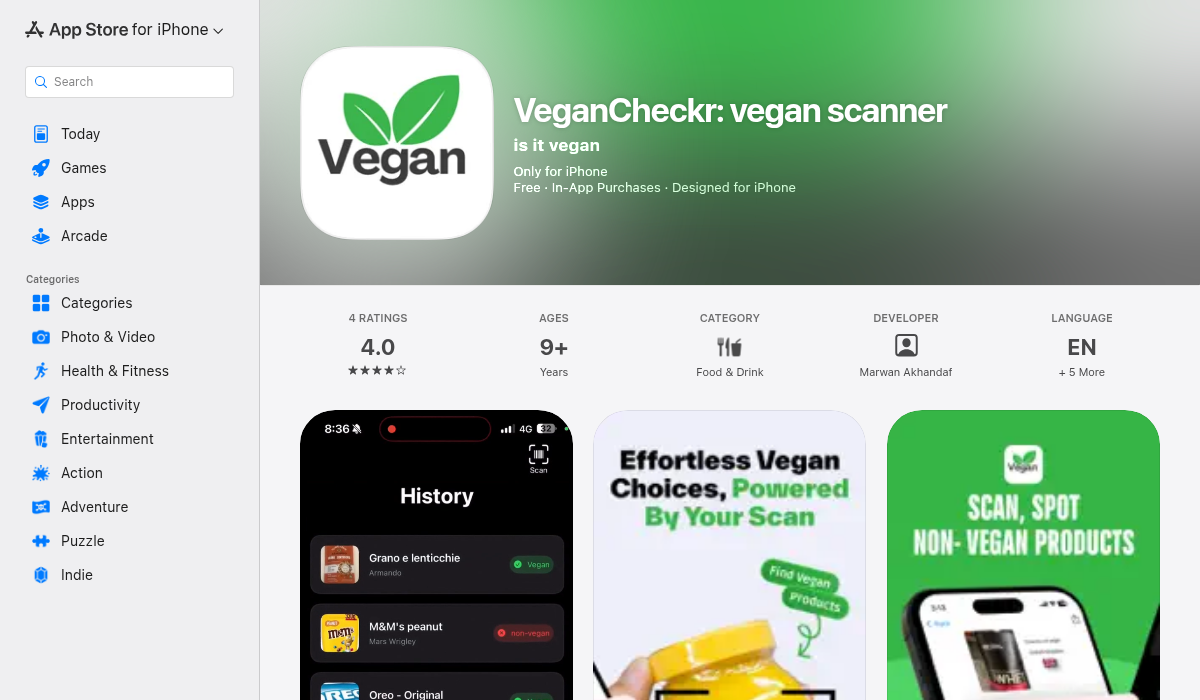
If you're avoiding soy while also following a plant-based diet, VeganCheckr solves a unique problem. Many vegan products rely heavily on soy protein — VeganCheckr helps you find alternatives.
What we liked:
- ✅ Barcode scanner with ingredient analysis
- ✅ Vegan restaurant/store map
- ✅ Product comparisons — find soy-free vegan alternatives
- ✅ Additive checker built-in
- ✅ Supply chain transparency
Limitations:
- ❌ Focused on vegan status (soy detection is secondary)
- ❌ iOS only
The product comparison feature is genuinely useful. Found a soy-based vegan burger you can't eat? VeganCheckr can suggest pea protein or wheat-based alternatives in its database.
Best for: Vegans and vegetarians with soy allergies who need to find alternative protein sources.
Download VeganCheckr on the App Store
4. ContentChecked — Best Database Coverage
ContentChecked has been around longer than most competitors, and it shows in their database. With over 200,000 products and coverage of all nine major allergens (plus less common ones like celery and mustard), it's one of the most comprehensive options.
What we liked:
- ✅ Massive product database
- ✅ Scans for 13+ allergens including soy
- ✅ Pre-select your allergens for instant warnings
- ✅ Works on both iOS and Android
Limitations:
- ❌ Interface feels dated
- ❌ Slower scan processing
- ❌ No AI analysis features
If database coverage is your priority — especially for mainstream US brands — ContentChecked rarely comes up empty. The app pre-loads your allergen profile, so every scan immediately flags soy without extra steps.
Best for: US shoppers who want reliable coverage of major grocery brands.
Hidden Soy Names Every Scanner Should Catch
A good scanner app should recognize all of these as potential soy:
| Obvious Names | Hidden Names |
|---|---|
| Soy, Soybean, Soya | Textured vegetable protein (TVP) |
| Tofu, Tempeh, Miso | Hydrolyzed vegetable protein |
| Edamame | Lecithin (E322) |
| Soy sauce, Tamari | Mono-diglyceride |
| Soy milk, Soy flour | "Natural flavors" (sometimes) |
Pro Tips for Soy-Free Scanning
- Use multiple apps — No single app catches everything. Run Soosee on the ingredient list, then scan the barcode with FoodCheckr for additive info.
- Check "may contain" warnings — Cross-contamination is real. Most apps flag these, but read the full result.
- Update your apps — Databases grow constantly. An app that missed a product last month might recognize it now.
- Screenshot unknown products — If an app can't identify something, save the barcode and ingredient list to research later.
- Build your safe list — Once you've verified products, most apps let you save favorites for quick re-checking.
The Bottom Line
For comprehensive soy detection, Soosee wins for its real-time ingredient highlighting — no barcode needed, works on anything with readable text. For deeper analysis including additives and AI-powered insights, FoodCheckr offers the most modern approach.
If you're vegan with a soy allergy (a tough combination), VeganCheckr helps you find alternatives. And for sheer database coverage of mainstream products, ContentChecked rarely fails to find what you're scanning.
The reality? Most people with serious soy allergies end up using 2-3 apps together. They complement each other — one catches what another misses. At $0-4/month each, it's a small price for peace of mind.
Start with a free option, scan your pantry, and see how many hidden soy sources you've been missing. You might be surprised.