
Best Low FODMAP Food Scanner Apps for IBS 2026
Living with IBS means every trip to the grocery store can feel like navigating a minefield. That mysterious ingredient on the label? It could be the difference between a good day and hours of bloating, cramps, and discomfort.
The low FODMAP diet has helped millions of IBS sufferers identify their trigger foods — but memorizing which fermentable carbs to avoid while standing in a supermarket aisle isn't exactly practical. That's where food scanner apps come in, letting you scan barcodes and instantly know whether a product is safe for your gut.
We tested the most popular low FODMAP scanner apps in 2026 to help you find the right one for managing your IBS symptoms.
Why IBS Sufferers Need a Food Scanner
FODMAP stands for Fermentable Oligosaccharides, Disaccharides, Monosaccharides, and Polyols — short-chain carbohydrates that some people struggle to digest. When these compounds ferment in your gut, they produce gas and draw in water, causing the classic IBS symptoms: bloating, cramping, diarrhea, and constipation.
The problem? FODMAPs hide everywhere. High-fructose corn syrup, inulin, garlic powder, honey — these common ingredients can trigger symptoms even in "healthy" foods. And reading ingredient labels for every product gets exhausting fast.
"I spent months trying to figure out my triggers by reading every label. Then I discovered the FODMAP stacking effect — foods that seem safe individually can add up to trigger symptoms when eaten together."— Reddit user in r/FODMAPS
A good scanner app does the heavy lifting, instantly flagging problematic ingredients so you can shop with confidence.
Best Low FODMAP Scanner Apps Compared
1. Monash FODMAP — The Gold Standard
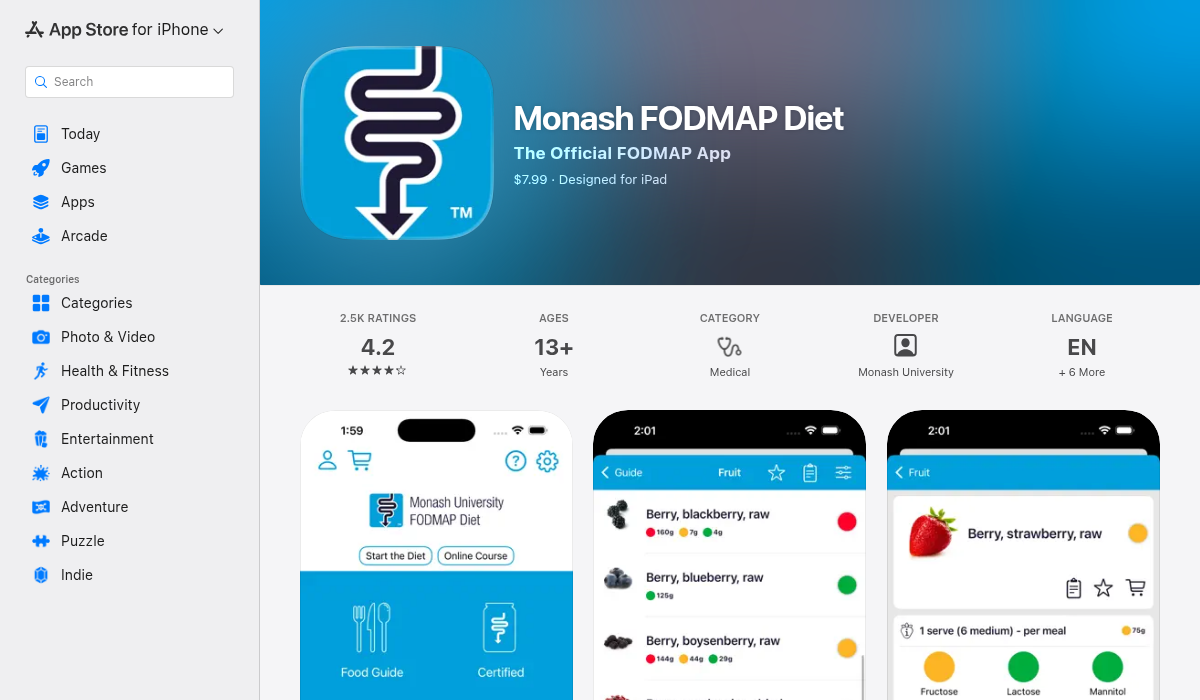
Created by Monash University — the researchers who literally invented the FODMAP diet — this app is the definitive reference. It includes a comprehensive database of foods with traffic-light ratings (green = low FODMAP, amber = moderate, red = high) and precise serving size recommendations.
The Monash app doesn't have barcode scanning, but what it lacks in convenience it makes up for in accuracy. Every food entry is backed by laboratory testing, not crowdsourced data.
- ✅ Most accurate FODMAP data (lab-tested)
- ✅ Traffic light system with portion sizes
- ✅ Recipe inspiration and meal planning
- ✅ Food diary feature
- ❌ No barcode scanning
- ❌ One-time purchase: $7.99
Best for: Serious low FODMAP dieters who want the most accurate data available.
2. Fig — Best Free Barcode Scanner
Fig is a free food scanner that lets you create custom dietary profiles — including low FODMAP. Scan any product barcode and Fig instantly tells you if it's compatible with your diet. You can even customize which specific FODMAP groups to flag (useful during the reintroduction phase when you're testing individual triggers).
The app was created by someone with IBS and SIBO, so it understands the real challenges of managing gut health.
- ✅ Free to use
- ✅ Barcode scanning
- ✅ Customizable FODMAP groups
- ✅ Supports multiple diet filters (GF, vegan, allergies)
- ❌ Database depends on user submissions
- ❌ Less detail on portion sizes
Best for: Budget-conscious users who want quick barcode scanning.
3. Spoonful — Detailed Product Analysis
Spoonful specializes in barcode scanning for dietary restrictions, including low FODMAP. It uses Monash data as its foundation and breaks down exactly which FODMAP groups are present in each product. The app also suggests alternatives when a product doesn't fit your diet.
The database focuses on US products, so it's particularly useful for North American shoppers.
- ✅ Uses Monash data
- ✅ Detailed FODMAP breakdown per product
- ✅ Alternative product suggestions
- ✅ Large US product database
- ❌ Subscription: $9.99/month
- ❌ Limited international coverage
Best for: US-based shoppers who want detailed per-product FODMAP information.
4. FoodCheckr — Additive & Hidden Ingredient Detection
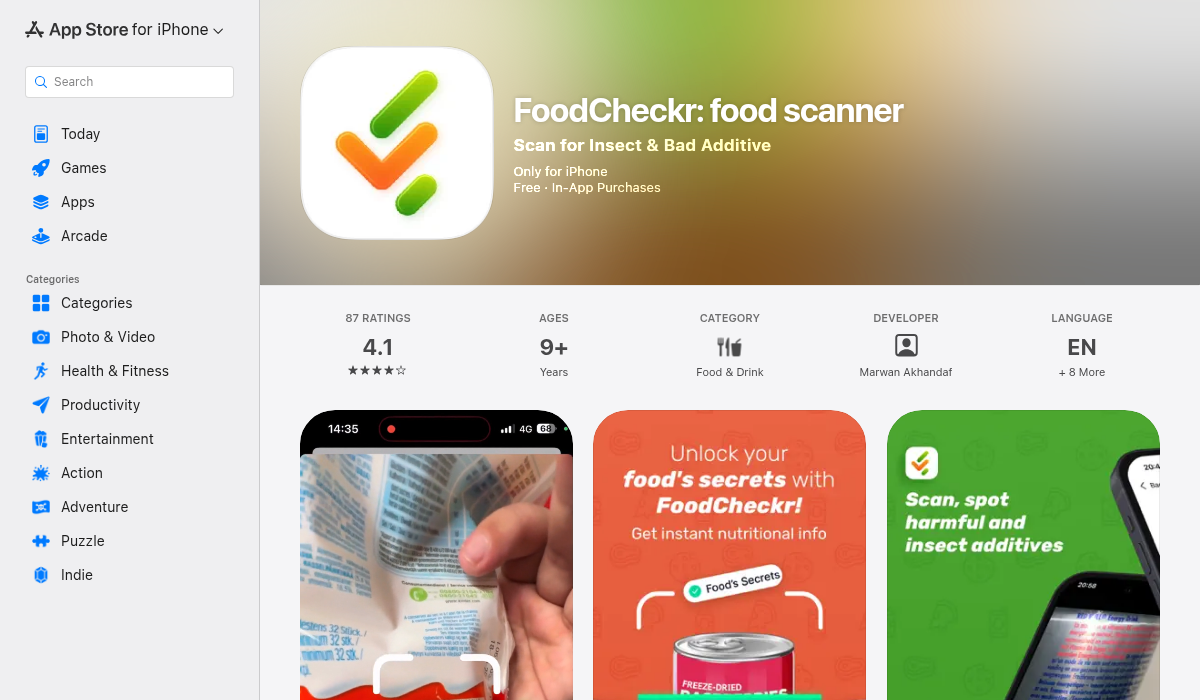
Here's where things get interesting. FoodCheckr takes a different approach — instead of just looking up FODMAP status, it uses AI to analyze every ingredient for potential concerns, including additives that can trigger gut issues in IBS sufferers.
Why does this matter? Many processed foods contain sneaky FODMAP sources that aren't always flagged: inulin (a common prebiotic fiber), FOS (fructooligosaccharides), sorbitol in "sugar-free" products, and even garlic/onion powders hidden as "natural flavors."
FoodCheckr's additive detection caught several concerning ingredients in our testing that pure FODMAP apps missed — including maltitol (a polyol that causes severe symptoms for many) listed as "sugar alcohol" on labels.
- ✅ AI-powered ingredient analysis
- ✅ Catches hidden additives FODMAP apps miss
- ✅ Flags potentially irritating E-numbers
- ✅ No data collection (privacy-focused)
- ✅ Affordable: $3.99/month or $17.99/year
- ❌ Not FODMAP-specific
- ❌ Requires some FODMAP knowledge
Best for: IBS sufferers who want deep ingredient analysis beyond just FODMAP status, especially for catching hidden triggers in processed foods.
5. FODMAP Friendly — Simple Free Reference
If you want a quick, free reference without bells and whistles, the FODMAP Friendly app offers a straightforward database of tested foods. It's not as comprehensive as Monash, but it's free and covers the essentials.
- ✅ Completely free
- ✅ Simple interface
- ✅ Certified FODMAP-friendly products
- ❌ Smaller database
- ❌ No barcode scanning
Best for: Beginners who want a free starting point.
Which App Should You Use?
Here's our recommendation based on your needs:
| Need | Best App | Price |
|---|---|---|
| Most accurate FODMAP data | Monash FODMAP | $7.99 (one-time) |
| Free barcode scanning | Fig | Free |
| US products + alternatives | Spoonful | $9.99/mo |
| Deep ingredient analysis | FoodCheckr | $3.99/mo |
| Simple free reference | FODMAP Friendly | Free |
Pro Tips for Managing IBS with Apps
- Stack your apps — Use Monash for accurate FODMAP data and FoodCheckr for catching hidden additives. They complement each other.
- Watch for FODMAP stacking — Multiple low-FODMAP foods eaten together can exceed your tolerance. Keep a food diary (most apps include this feature).
- Check "natural flavors" — This catch-all term often hides garlic and onion powder. Apps like FoodCheckr flag these.
- Don't trust "gut health" products blindly — Prebiotics like inulin and chicory root are marketed as healthy but are high-FODMAP disasters for IBS sufferers.
- Update your triggers — As you complete the reintroduction phase, customize your app filters to match your specific tolerances.
The Hidden Triggers Apps Help You Find
Beyond obvious FODMAPs, here are common hidden triggers that scanner apps catch:
- Inulin/chicory root fiber — Added to "high fiber" products, brutal for IBS
- Sugar alcohols (maltitol, sorbitol, xylitol) — In "sugar-free" foods, cause severe symptoms
- Natural flavors — Often contains garlic/onion derivatives
- Whey protein concentrate — High lactose content
- Agave syrup — Very high fructose despite "natural" marketing
- Honey — High fructose, often added to "healthy" products
The Bottom Line
Managing IBS doesn't have to mean spending hours reading labels or accidentally eating trigger foods. The right combination of apps can make grocery shopping faster and safer.
Our top recommendation: Start with the Monash FODMAP app ($7.99 one-time) for accurate baseline data, and add FoodCheckr to catch hidden additives and ingredients that pure FODMAP apps miss. The combination costs less than a single doctor's visit and can save you countless hours of discomfort.
For a completely free option, Fig does a solid job with barcode scanning — just verify critical foods against Monash data when in doubt.
Whatever you choose, having an app in your pocket beats squinting at ingredient labels under fluorescent supermarket lights. Your gut will thank you.